
Scottsdale summers aren't just about heat—they test every promise your AC makes. When a system is installed right, you feel it in every cool corner and every quiet cycle; miss a step, and you pay in heat and headaches.
Homeowners who swear by installation secrets know the first move isn't what you buy, it's how you fit it to the home. They nail proper sizing, seal ducts tight, and insist on a clean start with trusted equipment that matches the climate.
In Scottsdale, the real differentiator isn't a gadget; it's a plan crafted by a pro who measures like a scientist and treats the home as a system. Read on to see which moves these locals rely on to lock in comfort and keep the system singing for years.

Sizing and Load Calculations for Scottsdale Homes: The Foundation of Comfort
In Scottsdale, turning on the AC isn't enough—you need the right size to match the heat, the house, and the way you live. A unit that's too big runs in short bursts, ignores humidity, and wastes power; a unit that's too small never catches up and wears out prematurely. Smart sizing starts with the numbers, not guesswork, so you get steady temps and minimal wear on equipment.
What precise sizing delivers
- On-site measurements: ceiling heights, window areas, insulation levels
- Load calculations: Manual J or equivalent to size for heating and cooling
- Duct and envelope checks: leakage tests and air-flow paths
With those numbers in hand, we choose equipment that sits at the sweet spot—not oversized, not underpowered—so it runs longer, in consistent cycles. You feel the payoff in day-to-day comfort: even temps across rooms, quieter operation, and fewer dramatic swings that wake you at night.
Ductwork and Air Leakage: Sealing, Testing, and Tightening for Arizona Heat
Arizona heat loves to exploit loose ducts. If air leaks into the attic or crawlspace, your cool air never reaches the living space—and your contractor's job grows harder. The cure is simple in theory: seal every joint, every seam, every penetration with purpose-built products. We start with a meticulous ductwalk, cleaning out dust and debris before applying sealant so the bond lasts through many summers. Sealed ducts mean less loss and more comfort.
- Visual inspection of all accessible duct runs (attic, crawlspace, garage) to spot loose connections, punctures, or crushed sections.
- Identify common leak points: supply and return plenums, transitions, elbows, and around registers.
- Seal joints with high-quality materials—mastic for metal ducts and UL 181 foil tape for edges; avoid generic duct tape that fails in heat.
- Close gaps around penetrations where ducts pass through walls or ceilings; insulate duct runs in unconditioned spaces when needed.
- After sealing, touch up and recheck for gaps to ensure long-term performance.
After sealing, we verify with tests. A professional blower door test measures overall house airtightness, and a duct-blaster test quantifies leakage in the duct system. This gives us a clear map of remaining problem spots and guides the next fixes. Real data beats guesswork every time.
Testing to prove the seal
We run a focused, data-driven test process. A precise duct pressure test isolates leaks at joints, transitions, and penetrations. The results guide our next moves, ensuring you're not paying for air you don't feel.

Climate-Ready Equipment: Choosing Efficiency, Durability, and Proper Refrigerants
Scottsdale summers demand gear that can stand up to blistering days and dry air. Look for outdoor units rated for high ambient temperatures and coils with corrosion-resistant coatings. When the outdoor unit can drink the heat instead of fighting it, indoor comfort stays steady and the system keeps running without needless cycles.
Refrigerant choices and inside components matter as much as the box itself. Your installer should confirm the refrigerant type is approved for the model and aligned with current regulations, avoiding costly retrofits down the line. A robust design uses a proper refrigerant charge and tight seals to prevent leaks in dusty, sun-baked conditions.
Climate-ready features to demand
- High ambient temperature rating for temps well over 100°F
- Corrosion-resistant cabinets and coils to stand up to desert air
- Variable-speed or inverter-driven compressors for smooth, quiet operation
- Appropriate refrigerant type and compliant with current rules (R-410A, R-32, or R-454B as recommended)
- Accurate refrigerant charge and reliable leak testing during start-up
- Durable outdoor components and proper drainage for humidity swings
With these features in place, Scottsdale homes enjoy consistent cooling when the sun blazes and fewer service calls when monsoon clouds roll in. A setup designed around the climate also supports longer equipment life and predictable energy use year after year.
Duct Design and Zoning: Balancing Airflow Across Rooms and Floors
Think of duct design as the plumbing of your home cooling. Scottsdale layouts demand clean, direct runs, gentle turns, and properly sized trunks. When ducts are undersized or long and winding, air loses momentum, vents underperform, and hot pockets form behind walls. A true pro designs the system so pressure stays balanced from the intake plenum to every register, delivering uniform comfort with less noise and fewer short cycles.
Understanding Zone Control
Zoning uses dampers and separate thermostats to send air to busy areas while dialing back quiet ones. In many Scottsdale homes, upstairs bedrooms and sunlit spaces demand different treatment than the living areas below. A solid plan uses multiple zones and a reliable controller so each space hits its target without fighting the others.
With a smart zoning approach, you’ll notice the difference in daily life: a cooler upstairs on hot afternoons and a home that cools evenly from room to room. The result is consistent temperatures and a system that runs only as hard as needed, not more.
- Dampers matched to each zone with a dedicated thermostat or smart controller
- Return air paths planned to avoid re-circulation bottlenecks
- Insulated ducts and proper hangers reduce noise and energy loss
- Blower door test confirms tightness and steady pressure
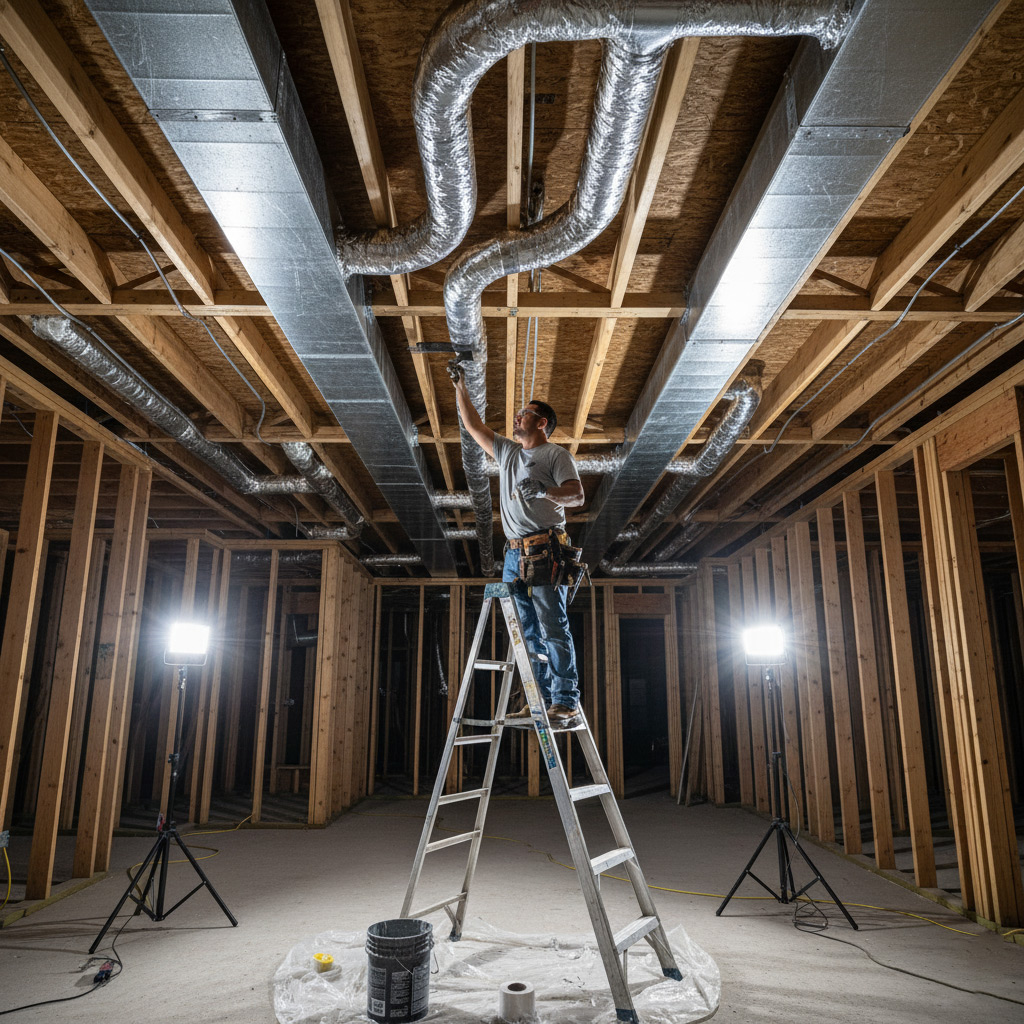
5. Commissioning and Start-Up: Verifying Performance and Setting the Long-Term Plan
Commissioning and start-up in a Scottsdale install are where the rubber meets the road. This isn't just flipping a switch; it's a checklist-driven pass that captures airflow, temperature balance, and control responsiveness in our heat and dust.
- Proper refrigerant charge and correct superheat/subcool readings
- Airflow balance across rooms and zones
- Thermostat and smart control integration tests
- Electrical connections, safety switches, and condensate drainage checked
We finish with a concrete long-term plan that keeps you out of guesswork. The team documents baseline performance, sets a maintenance cadence, and lays out a pre-season check routine so the system behaves when it matters most.
- Annual maintenance calendar with filter-change reminders
- Pre-season checks on compressors, coils, and electrical components
- Warranty coverage review and service records kept on file
With the start-up behind you, you have a clear ownership path: what to watch, when to call, and how to keep the system performing as the seasons shift. A thoughtfully commissioned install stays quiet, cool, and dependable—today, and for years to come.
Case Study: A Scottsdale Home Demonstrates Installation Secrets in Action
Before: Scottsdale Home Challenges
In this Scottsdale ranch, the Johnsons faced heat pockets and a noisy system. The 2,350 sq ft home had older ductwork that leaked air into attic spaces, making some rooms warm while others stayed chilly. Their old 13-14 SEER unit ran most of the day during summer, pushing up bills and leaving them with partial comfort.
- Precise load calculation using Manual J to match the home to a correctly sized system.
- Duct sealing with professional mastic and blower-door tests to cut air leakage.
- Right-sized equipment chosen for Scottsdale's high heat and humidity profile.
- Zoning added to balance airflow between living spaces and bedrooms.
- Commissioning plan to verify performance and set a long-term maintenance path.
In Action: Installation Secrets at Work
On install day, the crew started with a fresh load calc to confirm the target cooling tonnage. A new variable-speed blower and sealed duct system pulled air evenly across zones, with static pressure tested and kept within spec. The Johnsons felt cooler rooms, quieter cycles, and a noticeable drop in monthly bills. Long-term maintenance plans were set to keep the system singing year-round.
Conclusion
Scottsdale homeowners who swear by installation secrets know the payoff isn’t the fancy gadget—it’s the fit to their home. Accurate, room-by-room sizing and load matching stop hot spots and short cycling. Ducts are sealed, tested, and matched to climate so conditioned air stays where it belongs, not lost to attic crawlspaces or unused rooms.
- Room-by-room load calculations paired with the home’s layout and sun exposure.
- Duct sealing and testing that reveal true leakage and cut phantom loss.
- Climate-appropriate equipment with proper refrigerant charge and correct placement.
What this means for daily life
That upfront craft translates into real daily comfort in Scottsdale’s heat. The system runs more smoothly, cycles less, and keeps living spaces even from floor to floor. You’ll notice steadier temperatures, quieter operation, and easier tracking of energy use over the season.To keep the momentum, commissioning and a clean start set a performance baseline and a long-term plan. From day one, you’ll have a clear path: routine filters, refrigerant health, and a scheduled check-in that protects comfort and budgets. See more in our HVAC Installation hub.
People Also Ask
Why is load calculation essential for Scottsdale homes when installing a new HVAC system?
A precise load calculation ensures the system is sized for your home's heat gain and cooling needs, which is critical in Scottsdale's extreme summer heat. Incorrect sizing leads to comfort gaps, higher energy bills, and more wear on equipment. Professional load calculations improve efficiency and long-term reliability.
How does duct sealing reduce energy costs in Arizona heat?
Sealing ducts minimizes air leaks so more conditioned air reaches living spaces instead of escaping into attics or crawl spaces. It reduces unnecessary run-time and lowers utility bills, which is especially noticeable in Scottsdale summers. Air-tight ductwork also improves indoor comfort and system longevity.
What makes climate-ready equipment important for Scottsdale installations?
Equipment chosen for Scottsdale needs high efficiency, durable components, and refrigerants suitable for hot, dry climates. Selecting the right SEER rating and considering options like heat pumps or cooling-only systems ensures reliable performance in long summer bouts. Proper sizing and quality components reduce outages and maintenance costs.
How can zoning and duct design improve comfort in Scottsdale homes?
Zoning systems channel airflow where it’s needed most, balancing temperatures across rooms and floors. A well-designed duct layout minimizes hot spots and reduces energy waste caused by long, poorly designed runs. This is especially valuable in multi-story homes common in Scottsdale.
What happens during commissioning and start-up to ensure long-term performance?
During commissioning, technicians verify airflow, refrigerant charge, thermostat integration, and safety controls. They document baseline performance and provide a long-term maintenance plan for peak efficiency. A thorough start-up gives homeowners a clear, reliable baseline for years of comfort.

Scottsdale HVAC provides comprehensive heating, ventilation, and air conditioning services with deep roots in Scottsdale, AZ. With years of hands-on experience, the team specializes in installing, maintaining, and repairing residential and small commercial systems tailored to Arizona's climate. Based in Scottsdale, they serve neighborhoods across the area, delivering reliable, local service.
Need HVAC?
We deliver rapid, measurable results for homes and businesses across Scottsdale and neighboring ZIPs (85251, 85253, 85255, 85258, 85260). Our streamlined process ensures you see the impact within days.
Request a quick quote